This article was published in Cancer Therapy & Oncology International Journal. Abstract Multiple Myeloma (MM) accounts for 10% of all hematologic cancers. Despite improved treatments most patients will die from myeloma or from treatment-related impacts. A safe prophylaxis to reduce the risk of multiple myeloma, and a safe treatment toContinue Reading

Image of lungs above article header

This article was published in the International Journal of Pulmonary & Respiratory Sciences Abstract Asthma is the most common chronic disease of childhood. A plant-based diet can reduce the risk of asthma and can also be a step in the stepwise treatment of asthma. There is evidence of the influenceContinue Reading

Eye with cataract, over article header

This article was published in the journal JOJ Ophthalmology Abstract The percentage of complications in cataract surgery, even if only 5%, the cost of surgery, whether borne by the patient or insurance, and the stress that any surgical procedure causes, makes prevention of primary importance. A plant-based diet reduces theContinue Reading

Image of 2 kinds of stroke, combined with header of published article

This article was published in the Open Access Journal of Neurology and Neurosurgery. Abstract Current known modifiable risk factors for stroke together account for more than 90% of population attributable risk. A plant-based diet has been shown to reduce the risk of stroke by 28-48%, and to significantly reduce theContinue Reading

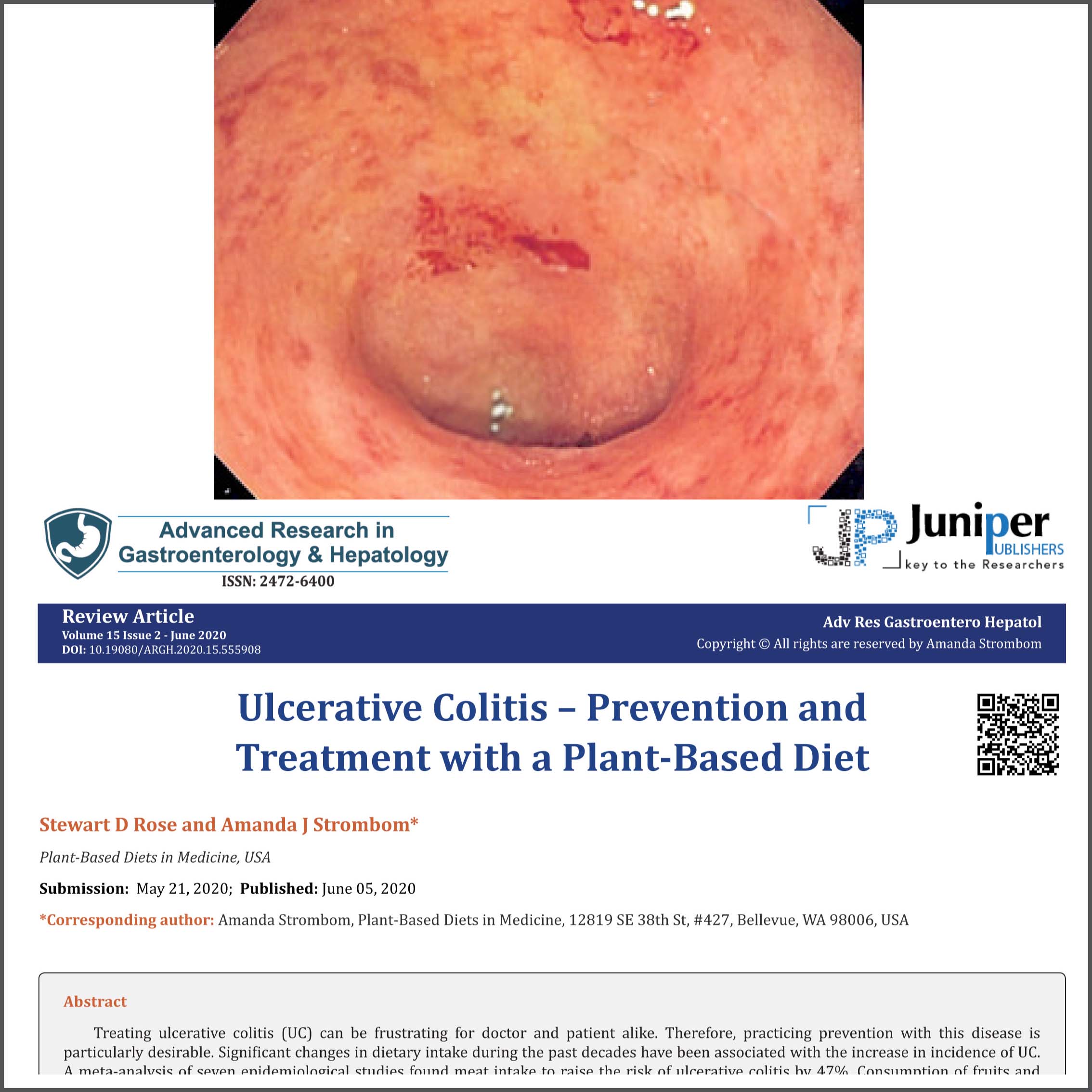
This article was published in the journal Advanced Research in Gastroenterology and Hepatology. Abstract Treating ulcerative colitis (UC) can be frustrating for doctor and patient alike. Therefore, practicing prevention with this disease is particularly desirable. Significant changes in dietary intake during the past decades have been associated with the increaseContinue Reading

This article was published in Advanced Research in Gastroenterology & Hepatology. Abstract Zinc is an essential mineral that is naturally present in some foods, added to others, and available as a dietary supplement. It is involved in numerous aspects of cellular metabolism, and also supports normal growth and development. FrequentContinue Reading

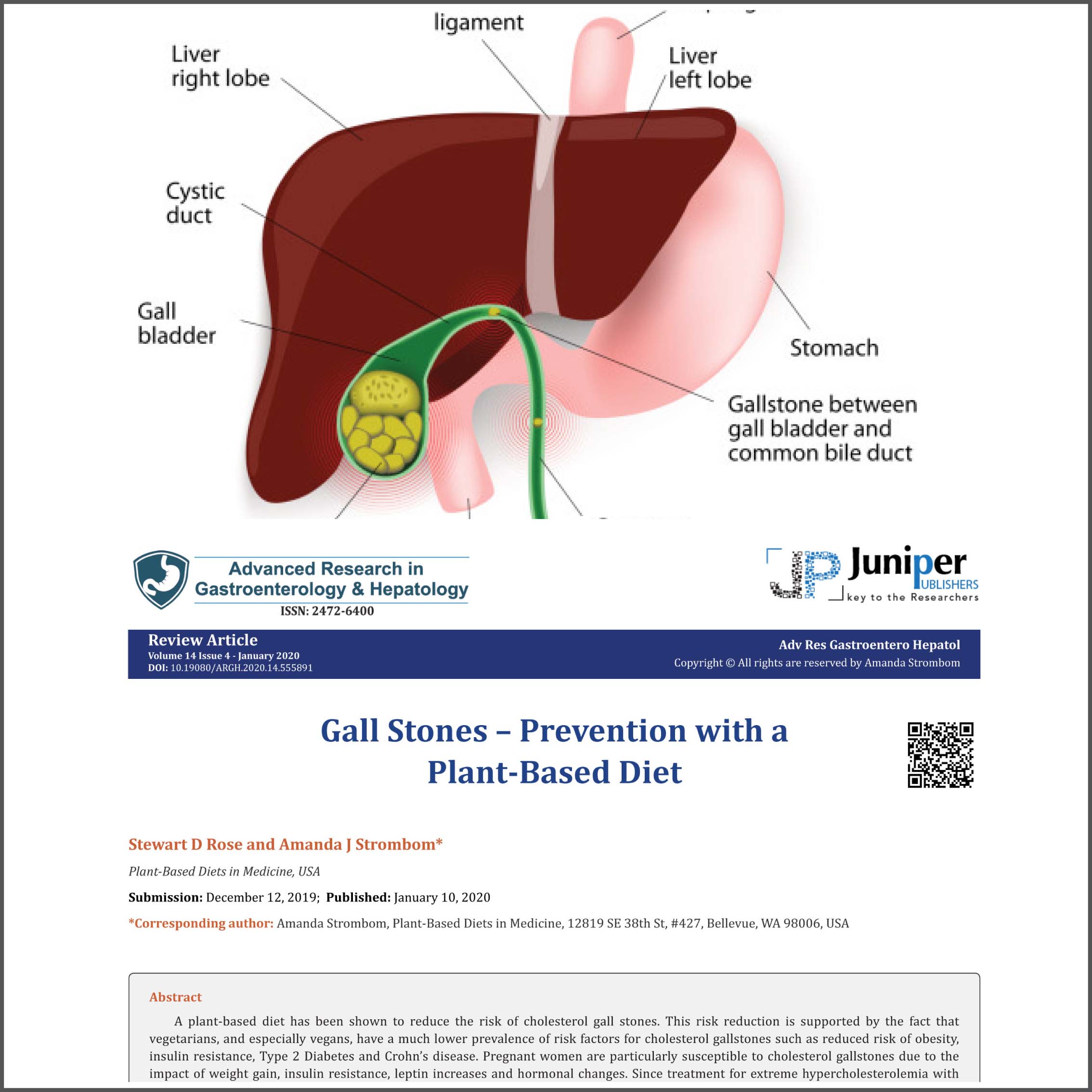
This article was published in Advanced Research in Gastroenterology & Hepatology. Abstract A plant-based diet has been shown to reduce the risk of cholesterol gall stones. This risk reduction is supported by the fact that vegetarians, and especially vegans, have a much lower prevalence of risk factors for cholesterol gallstonesContinue Reading

This article was published in Orthopedics and Rheumatology Open Access Journal Abstract Patients on a plant-based diet consume no dairy products and so must get their calcium from plant foods. Fortunately, a number of plant foods can supply the calcium needed. However, care needs to be taken to obtain calciumContinue Reading